
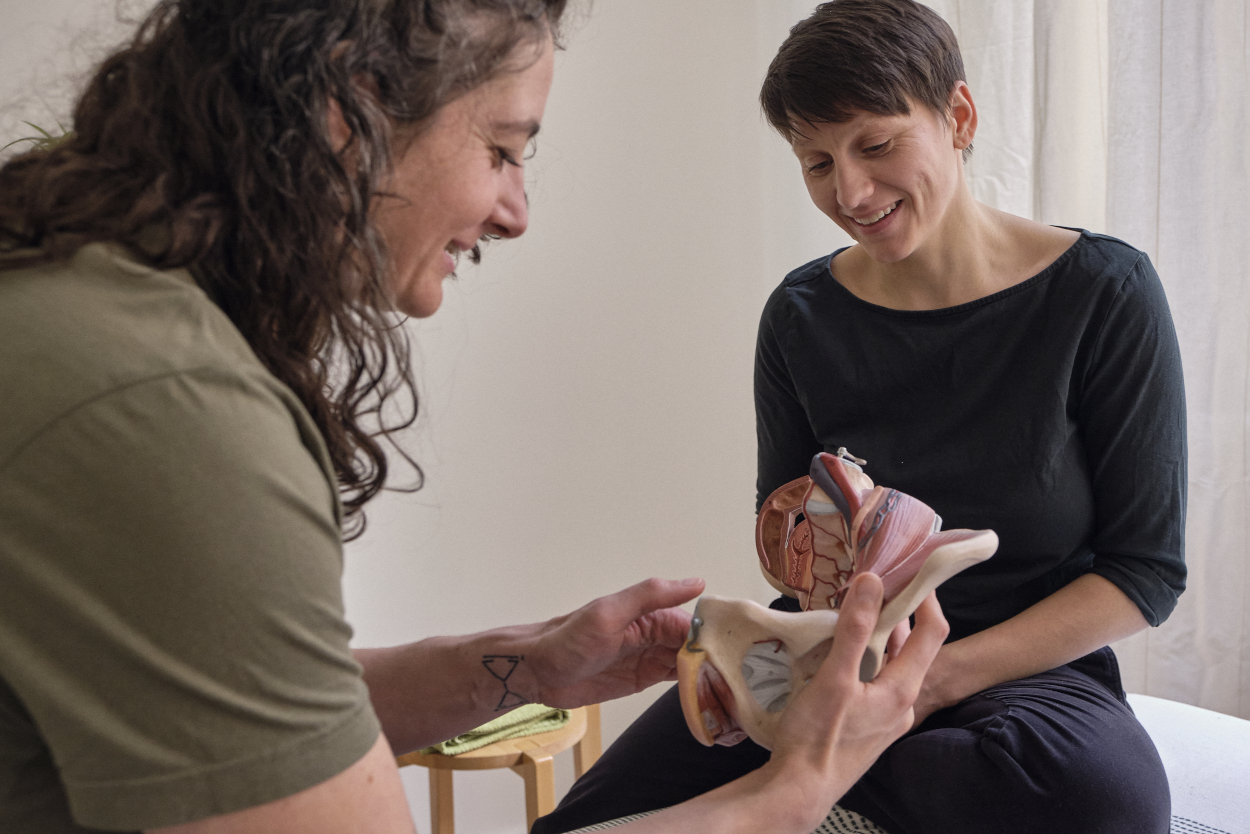
Urogynaecological processes are impressive and complex. They represent a finely tuned interplay of the hormonal and nervous systems, the organs, and their associated structures. Urogynaecological osteopathy focuses, among other things, on the organs of the pelvis and their functional relationships. These include the uterus, ovaries, vagina and vulva, bladder, and kidneys.
It is particularly important to me to develop a strategy together with my patients and to find techniques that help them get to know their own body better, manage pain, and find approaches to self-treatment.
When can osteopathy help?
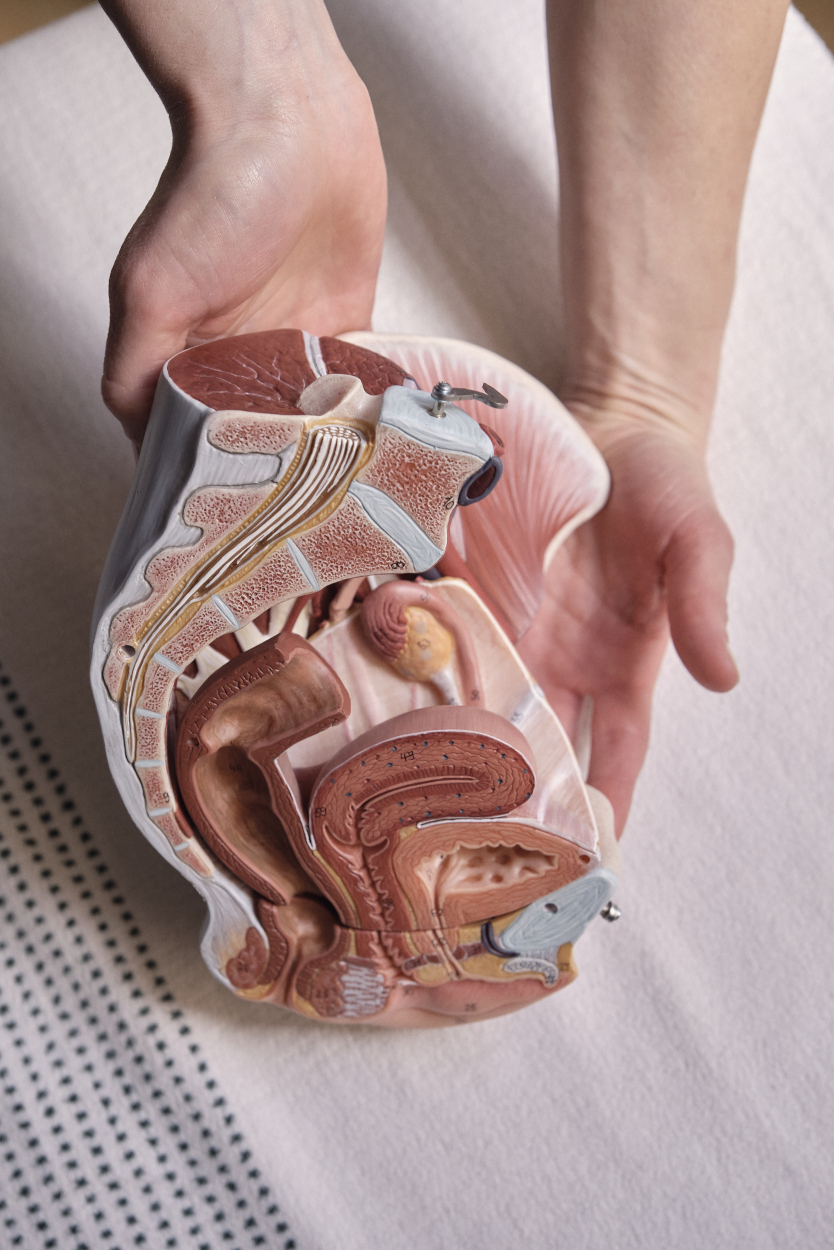
In osteopathy, I aim to view the body holistically in order to understand which structures may play a role in complaints.
Treatment encompasses both the regulation of the nervous and hormonal systems and the consideration and treatment of the organs and their functional relationships.
Alongside pregnancy support, the following conditions or problems, among others, may be addressed and supported osteopathically:
- Endometriosis
- Premenstrual syndrome (PMS)
- Menstrual pain
- Vulvodynia
- Overactive bladder
- Urinary incontinence
- Recurring vaginosis and urinary tract infections
- Pelvic Congestion Syndrome
- Pain during or after sex
- Weakness or tension in the pelvic floor muscles
- Fertility problems
The pelvic region forms the base of the spine; problems there can therefore affect the entire body. Urogenital and gynaecological issues can thus lead to pain in the sacrum/coccyx, sacroiliac joint, spine, and head, extending to migraine.
The body exists in a constantly changing hormonal balance. This affects not only the body but also feelings, emotions, and energy levels. Here too, careful attention is important to me.
Should gynaecological and urogenital scars be treated?
In my work I integrate my knowledge of scars and scar therapy with urogynaecological/urogenital osteopathy, for example after surgery or other events such as:
- Endometriosis or other conditions in the abdominal and pelvic region
- Scar tissue and adhesions in the abdominal cavity
- In the area of the vagina and vulva
- After birth, whether vaginal or by caesarean section
- Neovulva / neovagina
- Other injuries to the genital area
Scars in the urogenital area are a particular concern of mine. They often arise from birth injuries, inflammation, or surgical procedures — and yet frequently go unnoticed for a long time.
They can lead to increased tension in the pelvic floor, or to pain and restrictions in sexuality as well as during urination or bowel movements.
It is important to me to accompany this sensitive area with care and to help the body find greater ease again.
Before a postnatal exercise class, I therefore recommend a scar check-up so that the pelvic floor is well prepared and can become strong.
What can I expect from a treatment?
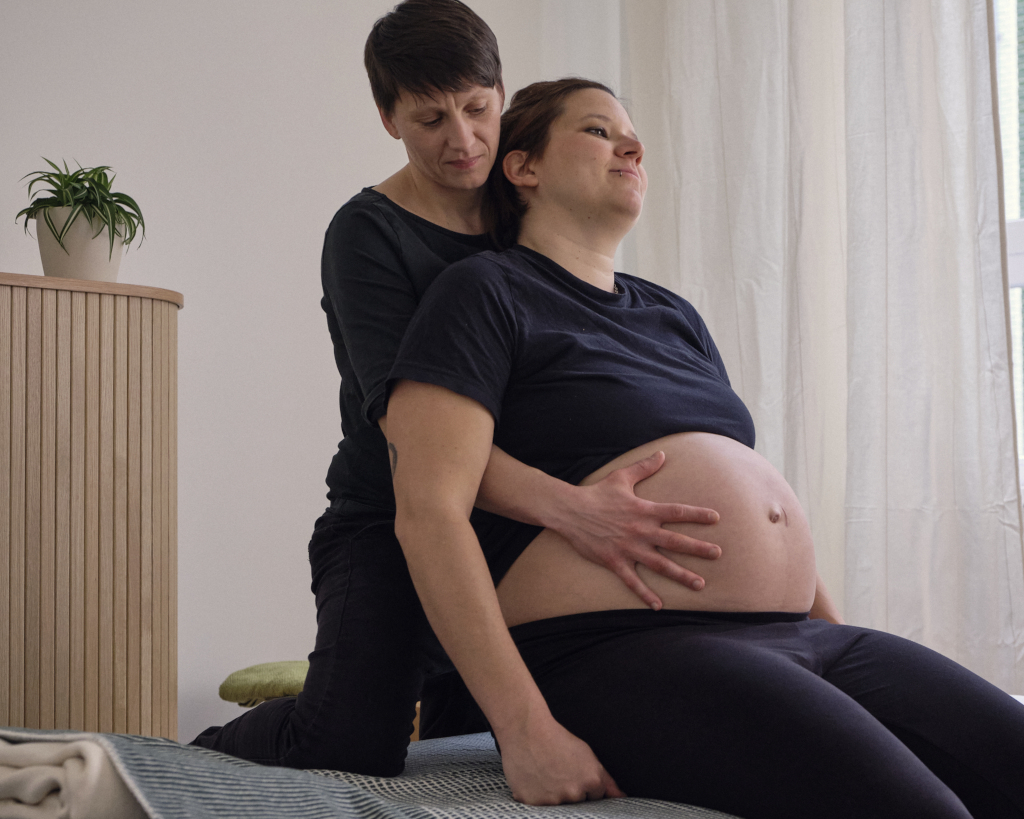
A consensual approach is the prerequisite for treatment and is very important to me.
We are often unfamiliar with the pelvic region, or feel disconnected from it due to pain or discomfort.
Through knowledge of structures and their relationships, I want to give people the means to get to know their own body better, and to reduce pain or complaints themselves.
Through both external and internal treatment techniques, complaints involving the bladder, uterus, ovaries, pelvic floor muscles, and more can be relieved.
Alongside external techniques, it may be beneficial to choose vaginal or anal treatment approaches.
All treatments involving internal or external contact in intimate areas are carried out only after excluding all contraindications and with the explicit consent of the patient.
What should I bring or keep in mind?
If you already have medical or surgical reports, please bring them to the first appointment.
If possible, allow yourself some time for a rest or a walk after the treatment.