
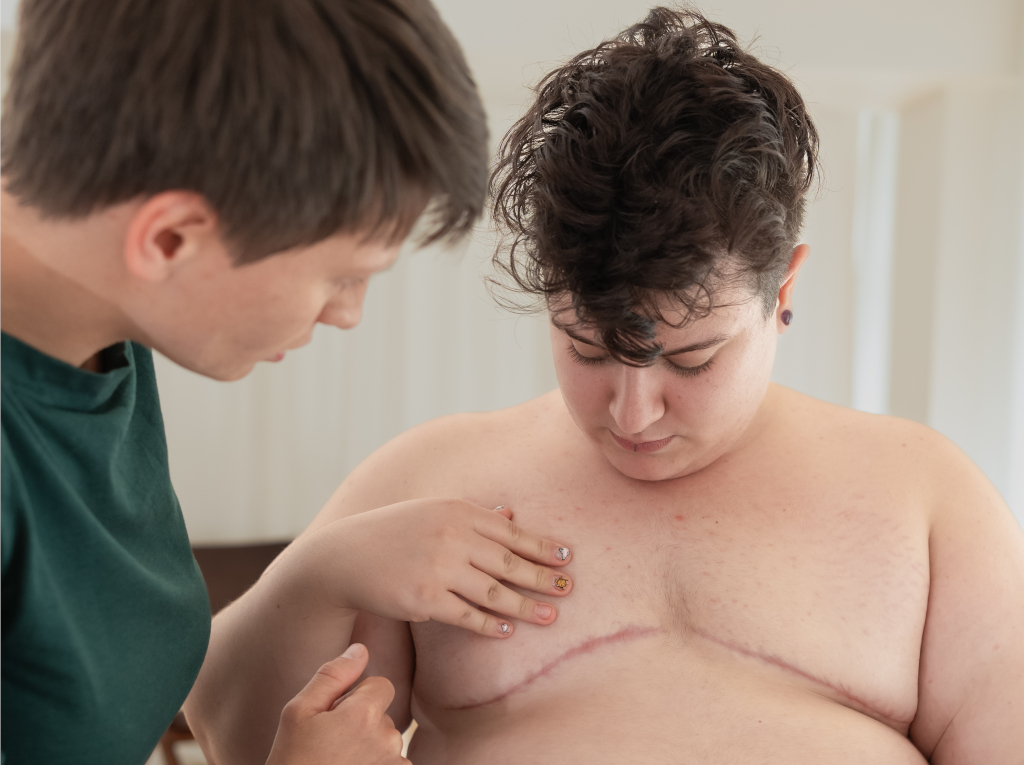
Every scar and its story deserves space and attention — whether after major surgery, a laparoscopy, or a caesarean section.
Osteopathic scar treatment offers the possibility of giving the body more room by treating the mobility and fascial connections of the scar tissue.
The goal is lasting freedom of movement and a noticeable reduction in pain.
Why should a scar be treated?
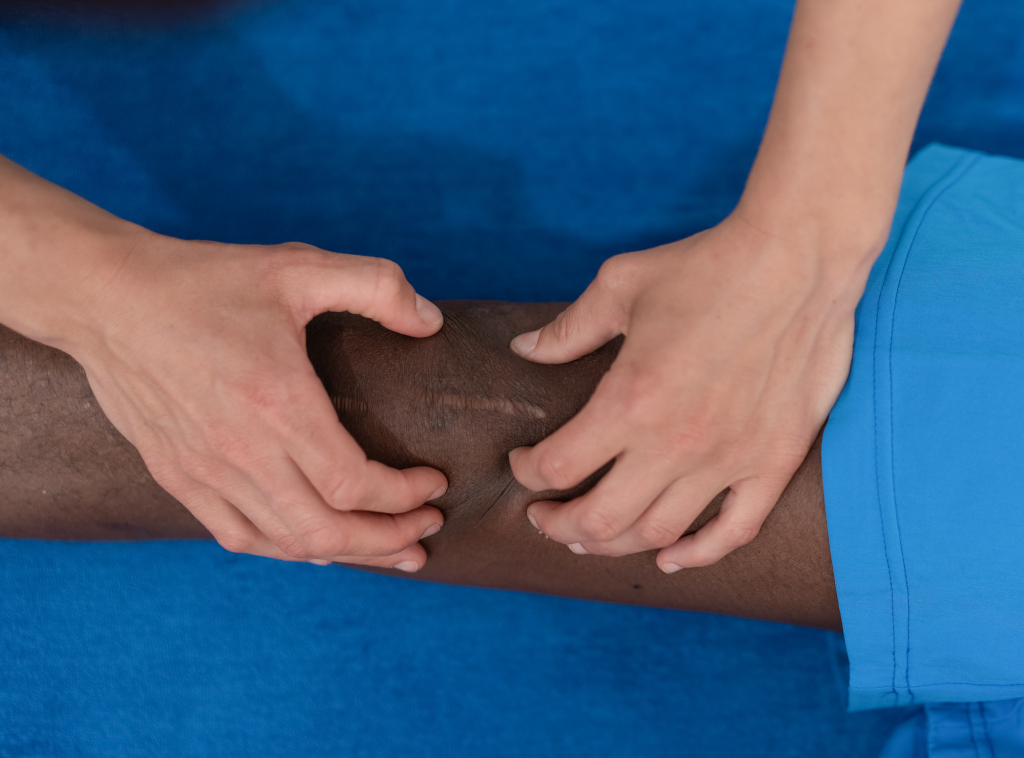
More mobility through scar therapy!
The focus of scar treatment is to restore mobility to scars and thereby make them functional again. What does that mean?
The body is a functional unit. All structures should be free in their movement, or have the ability to adapt to the body's demands. When adhesions or scars are present, the body loses its capacity for flexibility and compensation. Fascial tension can develop, which also affects the musculoskeletal, organ, and nervous systems. Common consequences include back pain, neck tension, headaches, menstrual pain, a feeling of being unable to breathe freely, and much more.
The goal is lasting freedom of movement and a noticeable reduction in pain.
Through my extensive experience in hand therapy, among other areas, I have been working with scars for more than 15 years.
When can a scar be treated?
Treatment before surgery
The better cared for and more relaxed the tissue is, the better the chances of good wound healing.
Through a physical check-up, I gain an initial impression of the body and tissue condition. Together, we can discuss planned surgeries and, in advance, work on exercises to relax and support the tissue, as well as breathing exercises.
Future postoperative scar care will also be discussed and explained in detail — for example, before a mastectomy.
undefined
Scar treatment after surgery
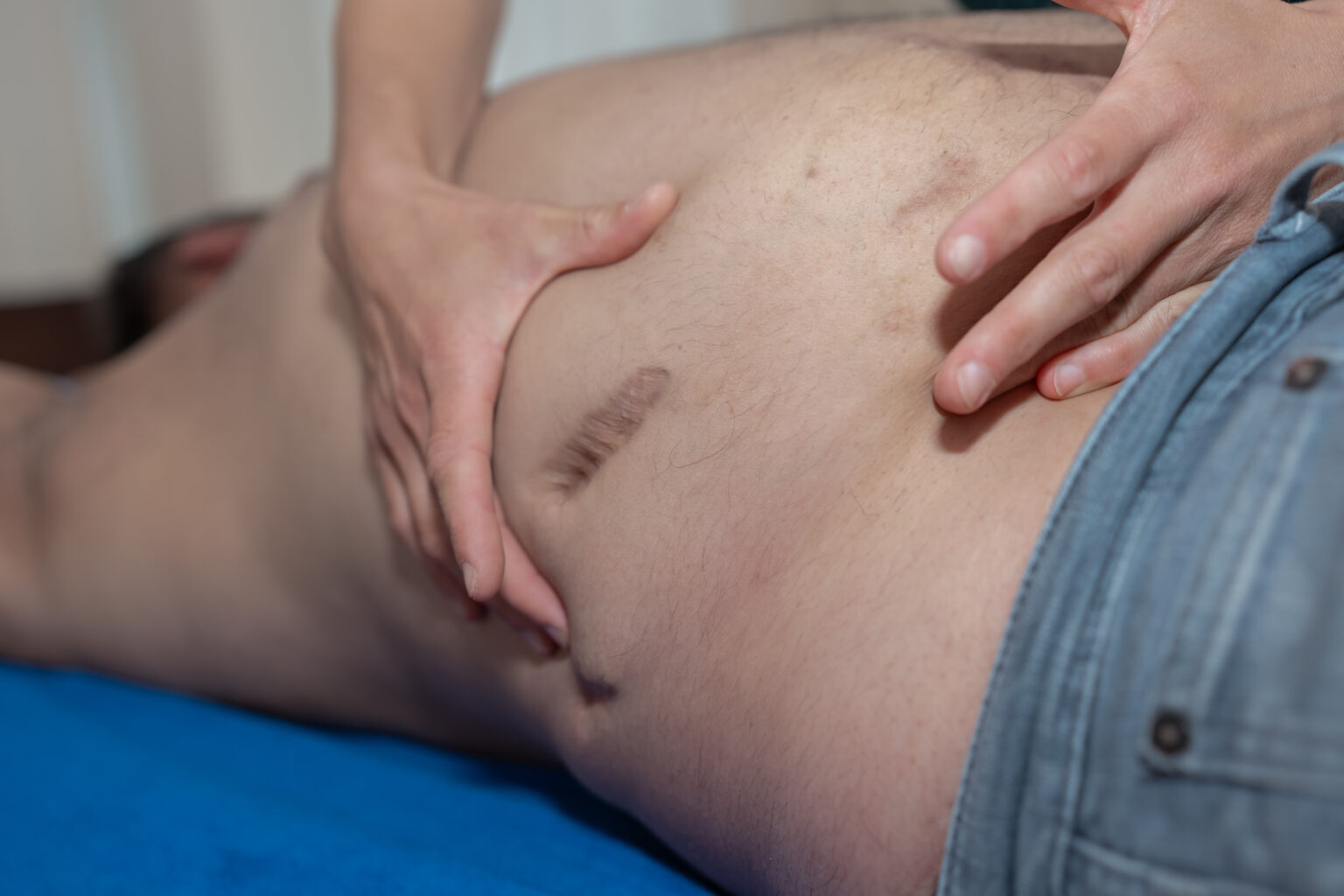
No scar is too "old". Even after many decades, scars can still be treated effectively and sustainably. What appears to be a superficial scar can, even years later, affect many deeper structures and regions.
When testing the scar, its mobility and the fascial connections of the scar tissue are examined. Osteopathic techniques allow me to work precisely on individual structures. In some cases, direct techniques such as the Liedler concept are appropriate.
Individual exercises are shown and discussed, as many techniques can be performed independently at home. This makes the scar and the body freer and more mobile.
Urogenital Scars
A particular concern of mine is the treatment of scars in the urogenital area. They often arise from birth injuries, inflammation, or surgical procedures, yet frequently go unnoticed for a long time.
They can lead to increased tension in the pelvic floor, pain and restrictions in sexuality, as well as during urination or bowel movements.
It is important to me to accompany this sensitive area with care, to help the body find greater ease again, and to restore full functionality to the pelvic region.
Before a postnatal exercise class, I therefore recommend a scar check so that the pelvic floor is well prepared and can become strong.